Intelligence that adapts.
Autonomy that remains safe.
The Adaptive Intelligence & Autonomous Systems Lab develops learning-enabled control and robotics methods for autonomous systems operating under uncertainty, physical constraints, and human interaction.
Purdue University Northwest
Department of Electrical and Computer Engineering
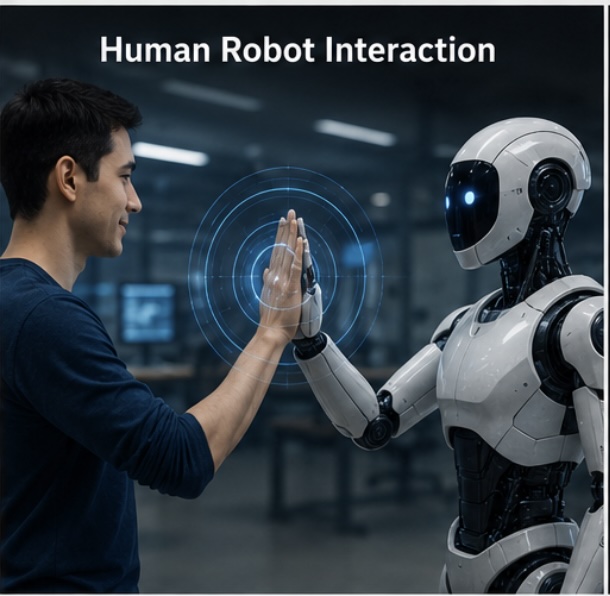
What We Do
We perform fundamental and applied research at the intersection of adaptive control, learning-based control, reinforcement learning, humanoid robotics, cooperative robotics, neural computation, and cyber-physical systems. Our work seeks rigorous learning algorithms that improve online while preserving safety, stability, and cooperative behavior.
Adaptive & Learning Control
- Nonlinear adaptive control
- Adaptive optimal control
- Learning-based control
- Online reinforcement learning
- Continual and lifelong learning
Humanoid & Cooperative Robotics
- Humanoid robotics
- Human–robot teaming
- Multi-robot coordination
- Autonomous manipulation
- Intent-aware interaction
Neural Autonomous Systems
- Spiking neural networks
- Graph neural networks
- Adaptive neural learning
- Energy-efficient intelligence
- Safety-critical autonomy
Research Activity
Growing research activity
This animated timeline highlights the growth of AIAS-related research activity across adaptive control, learning, robotics, and human–robot systems.
Recent Updates
Lab
Grant
Journal
Journal
Conference
People

Irfan Ahmad Ganie, Ph.D.
Director, AIAS Lab
Assistant Professor of Electrical Engineering
Purdue University Northwest
Dr. Ganie's research focuses on adaptive and learning-based control, online reinforcement learning, neural networks, intelligent autonomous systems, humanoid robotics, human–robot collaboration, and cooperative control.
Previous Research Students
Joshua Roman
Undergraduate research mentee, Wilkes University
Matthew Kralj
Undergraduate research mentee, Wilkes University
Thesis Committee Service
Nick Romas
M.S. Mechanical Engineering, Wilkes University, 2026 — Thesis Committee Member
Research Projects
Each research theme opens into its own project page with methods, figures, publications, and future directions.
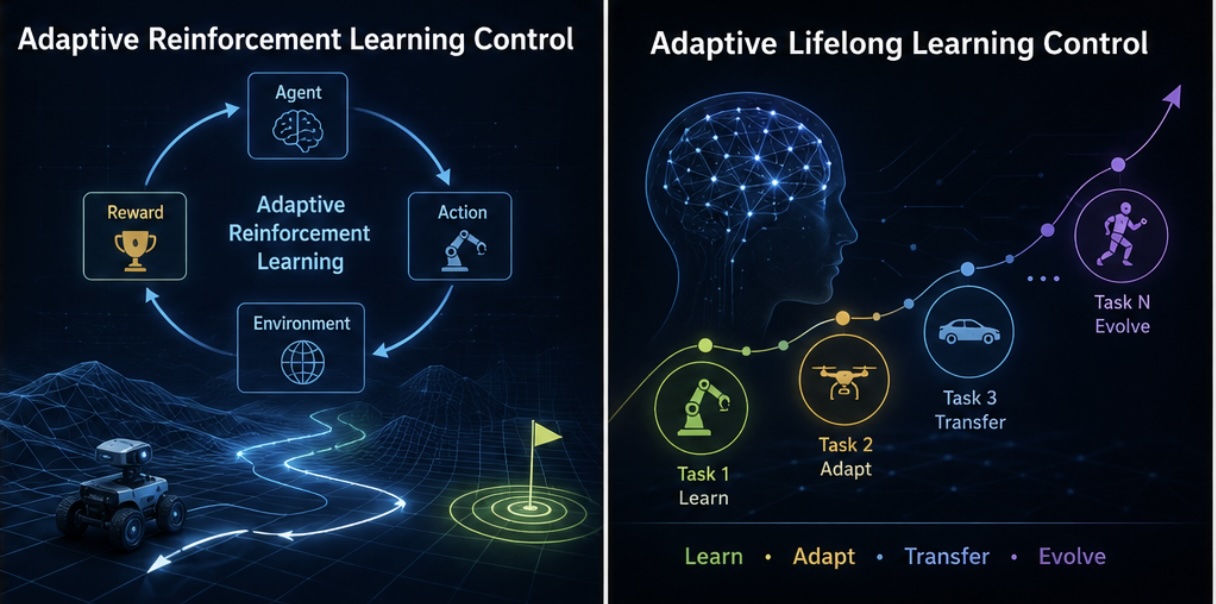
Adaptive Learning Control
Adaptive optimal control, safe reinforcement learning, continual learning, and online learning for uncertain nonlinear systems.
Open project →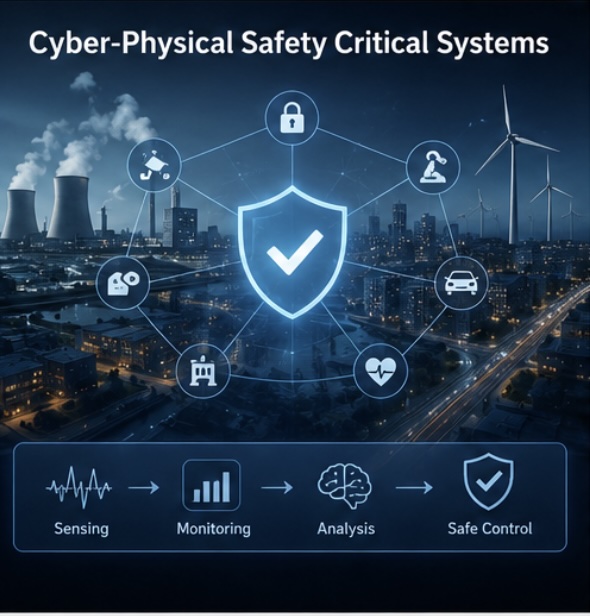
Humanoid Robotics
Learning and control for humanoid systems, whole-body adaptation, safe interaction, and intelligent physical autonomy.
Open project →Human–Robot Teaming
Intent-aware cooperative control and learning methods for physical collaboration between humans and robot teams.
Open project →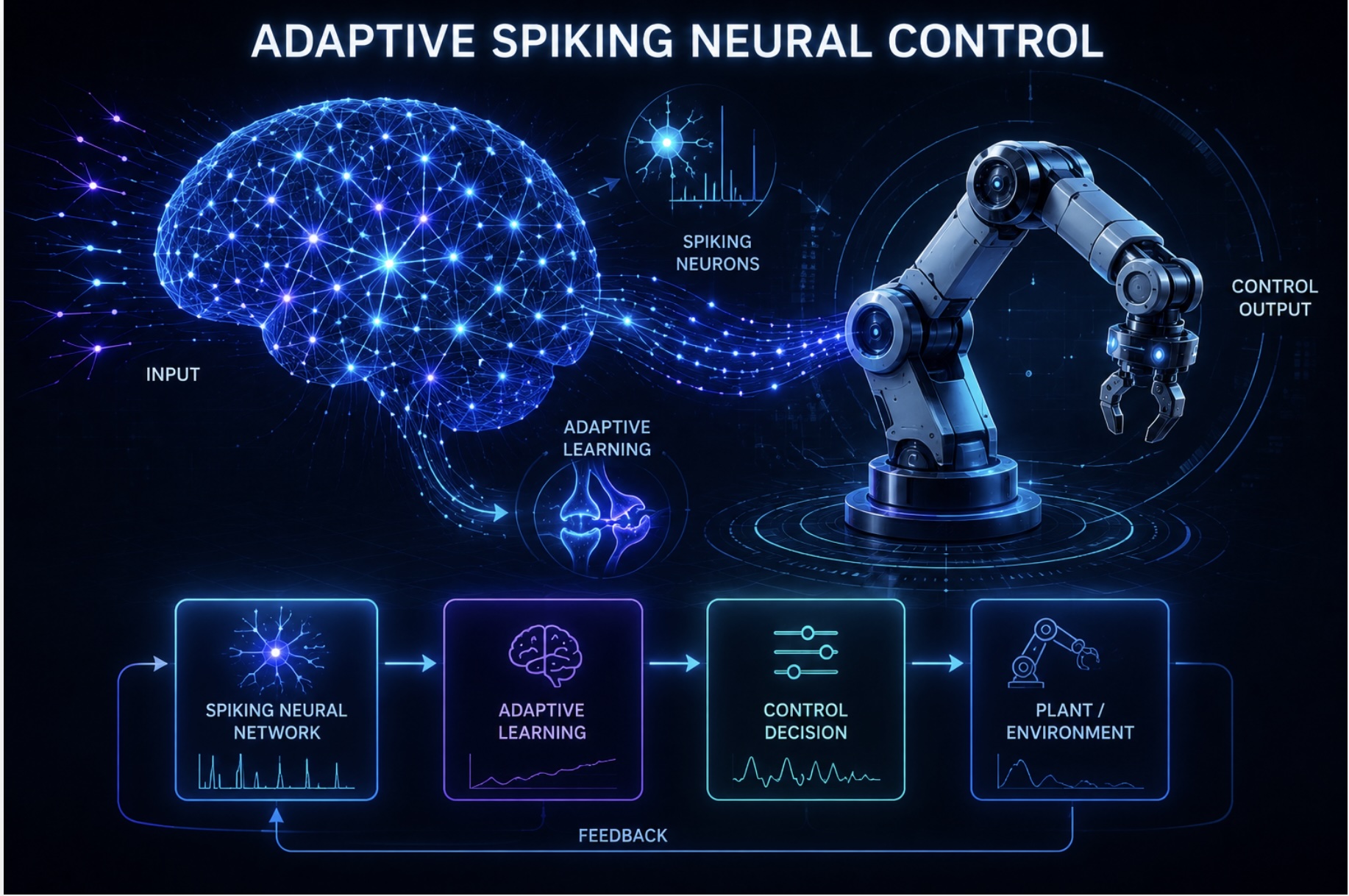
Neuromorphic & Spiking Neural Control
Adaptive neuromorphic controllers combining online learning, safety guarantees, and energy-efficient computation.
Open project →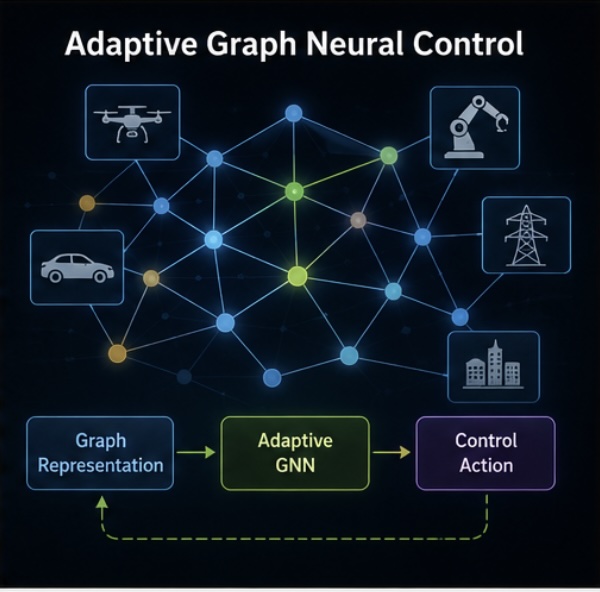
Multi-Robot Learning & Coordination
Distributed learning architectures for scalable coordination, adaptation, and safety in networked robotic systems.
Open project →Selected Publications
I. Ganie and S. Jagannathan, “Safety-Critical Adaptive Spiking Multilayer Neural Control of Nonlinear Systems,” American Control Conference, 2026.
I. Ganie and S. Jagannathan, “Safety-Aware Continual Reinforcement Learning-Based Output Tracking Control of Nonlinear Continuous-Time Systems,” IEEE Transactions on Systems, Man, and Cybernetics: Systems, 2026.
I. Ganie and S. Jagannathan, “Safe Optimal Control Framework for Cooperative Manipulation of Objects in Human–Robot Teams,” IEEE Transactions on Cybernetics, 2026.
Joining Us
The AIAS Lab welcomes motivated undergraduate and graduate students interested in control systems, humanoid and cooperative robotics, reinforcement learning, learning-based control, machine learning for dynamical systems, and autonomous systems.
Students should have a strong interest in mathematical modeling, control, programming, robotics, or machine learning. Experience with MATLAB, Python, ROS/ROS2, embedded systems, or experimental robotics is useful but not required for every project.
Interested students may contact Dr. Ganie at iganie@purdue.edu or iganie@pnw.edu.